Southern California is facing one of its most alarming industrial emergencies in recent years after an unstable chemical storage tank at a GKN Aerospace facility in Garden Grove, California, threatened to explode or unleash a massive toxic spill. Authorities have evacuated tens of thousands of residents while emergency crews work around the clock to stabilize the volatile situation.
The crisis began when officials discovered that a large tank containing methyl methacrylate (MMA), a highly flammable chemical used in plastics and aerospace manufacturing, had started overheating. According to emergency responders, the tank’s internal temperature has been steadily climbing, increasing fears that the structure could rupture or explode at any moment.
A Growing Emergency in Garden Grove
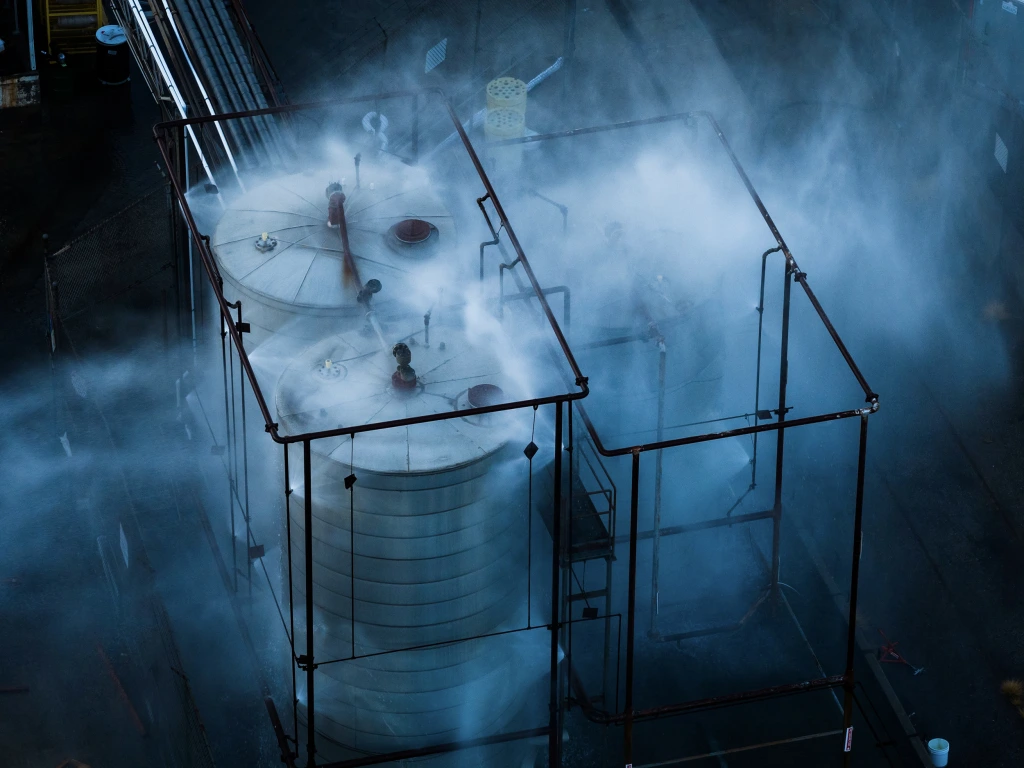
The chemical emergency unfolded at the GKN Aerospace plant in Garden Grove, located in Orange County near residential neighborhoods, schools, and businesses. Initially, firefighters believed cooling measures were helping stabilize the tank. However, later inspections revealed the internal temperature was continuing to rise despite efforts to cool the exterior with water.
Officials warned that the tank contains between 6,000 and 7,000 gallons of methyl methacrylate. MMA is widely used in industrial applications, especially for manufacturing acrylic plastics and resins. While useful in manufacturing, it becomes extremely dangerous under high temperatures because it is both volatile and highly flammable.
Emergency authorities described the situation in stark terms. According to reports from local and national outlets, officials believe there are only two likely outcomes if the tank cannot be stabilized: a catastrophic chemical spill or a powerful explosion.
Tens of Thousands Forced to Evacuate
As the danger escalated, California officials ordered mandatory evacuations across parts of Garden Grove and nearby communities including Anaheim, Stanton, Cypress, and Buena Park. Reports estimate that between 40,000 and 50,000 residents have been displaced due to the threat.
Schools within the evacuation zone were shut down, and emergency shelters quickly filled with families fleeing the area. Residents described scenes of confusion and anxiety as roads closed and authorities went door to door urging people to leave immediately.
Some residents reportedly refused evacuation orders, unwilling to abandon homes and businesses despite the looming danger. Officials warned that remaining in the area could expose people to toxic fumes or severe injuries if the tank explodes.
The situation has also disrupted local events and daily life across Orange County. Community centers, schools, and temporary shelters have become emergency support hubs for displaced residents.
Why Methyl Methacrylate Is So Dangerous
Methyl methacrylate is a colorless liquid commonly used in producing acrylic glass, coatings, adhesives, and automotive parts. Although widely used in manufacturing, the chemical poses major hazards when heated or released into the environment.
Health experts warn that exposure to MMA vapors can irritate the eyes, skin, and respiratory system. In high concentrations, inhalation can cause breathing difficulties, dizziness, nausea, and neurological symptoms.
The greatest concern, however, is the possibility of thermal runaway — a chain reaction in which the chemical rapidly heats itself, increasing pressure inside the tank until it ruptures violently. Experts fear that if the vessel fails, toxic chemicals could spread over a large area or ignite in a massive explosion.
Authorities have also expressed concern about environmental contamination. Emergency crews are preparing barriers and containment systems in case chemicals spill into nearby waterways or storm drains.
Firefighters and Experts Search for Solutions
Firefighters from the Orange County Fire Authority have been working continuously to cool the tank and monitor temperature changes using drones and remote equipment. Yet the challenge has proven extremely difficult because damaged pressure valves reportedly prevent responders from safely removing the chemical or reducing pressure inside the container.
Specialists from across the United States have joined the response effort. Engineers, hazardous-material experts, and chemical safety teams are exploring unconventional methods to neutralize the tank before disaster strikes.
Some emergency crews have attempted to stabilize nearby storage tanks to prevent a chain reaction if the compromised vessel fails. Authorities say they are considering every available option while acknowledging that no guaranteed solution currently exists.
The incident has already drawn comparisons to past industrial disasters in the United States, including the East Palestine train derailment in Ohio, where toxic chemicals triggered major environmental and public health concerns.
California Declares State of Emergency
California Governor Gavin Newsom declared a state of emergency for Orange County to unlock additional resources and support emergency operations. The declaration allows state agencies to coordinate evacuation efforts, provide shelter assistance, and mobilize hazardous-material specialists.
State officials emphasized that public safety remains the top priority. Emergency management teams continue monitoring air quality in surrounding neighborhoods, and officials say no widespread toxic exposure has been detected so far.
Still, the uncertainty surrounding the tank’s condition has left residents deeply anxious. Families displaced from their homes have spent days in shelters or hotels waiting for updates from authorities. Many remain uncertain about when they can safely return.
Lawsuits and Questions About Accountability
Even as crews battle the immediate threat, legal and political questions are beginning to emerge. Reports indicate that residents have already filed lawsuits against GKN Aerospace, alleging negligence and demanding accountability for the dangerous conditions that led to the crisis.
Investigators are also trying to determine what caused the tank to overheat in the first place. Officials have not yet announced whether equipment failure, maintenance problems, or operational mistakes contributed to the incident.
The unfolding emergency has reignited debate over industrial safety standards, especially for facilities located near densely populated communities. Critics argue that stronger oversight may be needed to prevent similar incidents in the future.
A Community Waiting for Answers
As firefighters continue their race against time, Southern California remains on edge. Every hour that passes without stabilization increases pressure on emergency responders and heightens public concern.
For now, officials continue cooling operations, evacuation enforcement, and environmental monitoring while hoping to avoid the worst-case scenario. Yet with the tank still unstable and temperatures rising, the possibility of disaster remains very real.
The Garden Grove chemical crisis has become a stark reminder of the risks posed by industrial chemicals in urban areas — and of how quickly a routine industrial operation can transform into a regional emergency affecting tens of thousands of lives.