Millions Face Poor Air Quality as Wildfire Smoke Spreads Across North America
A thick blanket of wildfire smoke drifting from Canada and northern Minnesota has spread across much of the United States, leaving millions of people under air quality alerts. From the Great Lakes to the Northeast and Mid-Atlantic, residents have awakened to hazy skies, reduced visibility, and unhealthy air conditions. Even Washington, D.C., one of the nation’s most recognizable cities, has been shrouded in dense smoke, making landmarks such as the U.S. Capitol and Washington Monument barely visible.
The event is another reminder that large wildfires can affect communities hundreds or even thousands of miles away. Although the fires themselves are burning primarily in remote regions of Canada and parts of Minnesota, shifting wind patterns have carried smoke deep into the United States, creating widespread public health concerns.
Why Is the Smoke Reaching So Far?
Wildfire smoke contains tiny particles known as PM2.5, which are small enough to enter the lungs and even the bloodstream. Strong upper-level winds have transported these particles across state borders, allowing smoke from active fires in Ontario and northern Minnesota to travel throughout the Midwest, Northeast, and Mid-Atlantic.
Meteorologists explain that weather systems play a major role in determining where smoke travels. As winds shifted southward, dense smoke spread into major cities, including Chicago, Detroit, Cleveland, Pittsburgh, Philadelphia, New York City, Baltimore, and Washington, D.C. Air quality forecasts indicate that changing weather patterns, including thunderstorms in some regions, may temporarily improve conditions, but additional smoke could return while wildfires remain active.
Washington, D.C. Covered in an Eerie Haze
Residents in the nation’s capital experienced unusually dark skies as smoke blanketed the city. Many reported difficulty seeing familiar landmarks, while the sunrise and sunset appeared deep orange because of smoke particles filtering sunlight.
The haze not only affected visibility but also raised concerns about outdoor safety. Public health officials urged residents to limit outdoor activities, especially children, older adults, pregnant individuals, and anyone with asthma, heart disease, or other respiratory conditions.
The unusual conditions transformed the appearance of the city, with photographs showing iconic monuments fading into thick gray skies. Similar scenes have been witnessed across several northeastern cities during previous wildfire seasons, highlighting how wildfire smoke has become an increasingly common environmental challenge.
Public Health Concerns Continue to Grow
Health experts warn that wildfire smoke is more than just an inconvenience. Fine particulate pollution can trigger breathing difficulties, asthma attacks, eye irritation, coughing, and cardiovascular problems. Even healthy individuals may experience throat irritation or reduced lung function after prolonged exposure.
People living in areas with poor air quality are encouraged to:
- Stay indoors whenever possible.
- Keep windows and doors closed.
- Use air conditioning with clean filters if available.
- Wear a properly fitted N95 or KN95 mask when outdoor exposure is unavoidable.
- Avoid strenuous outdoor exercise until air quality improves.
- Monitor local Air Quality Index (AQI) updates regularly.
Medical professionals also recommend checking on elderly family members and neighbors who may be particularly vulnerable during extended smoke events.
Impact on Daily Life
The smoke has disrupted daily routines across several states. Outdoor sporting events have been postponed or canceled due to unhealthy air conditions, while schools, parks, and recreational facilities have advised people to reduce outdoor exposure.
Travel has also been affected, with reduced visibility creating challenges in some areas. Businesses that rely on outdoor operations, including construction companies and landscaping services, have had to modify work schedules to protect employees.
Communities have responded by distributing protective face masks and opening indoor public spaces where residents can escape hazardous outdoor air.
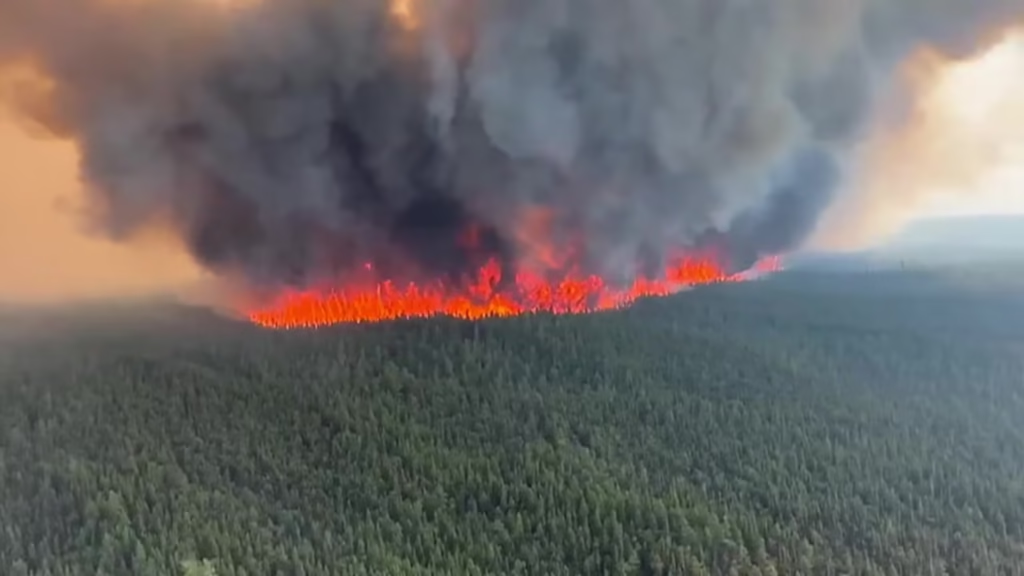
Canada Continues to Battle Hundreds of Wildfires
Canada remains in the middle of another challenging wildfire season, with hundreds of active fires burning across multiple provinces. Several of these fires remain uncontrolled despite ongoing firefighting efforts.
Dry conditions, high temperatures, and strong winds have contributed to rapid fire growth. Some communities have been forced to evacuate as emergency crews work to contain the blazes.
While Minnesota has also experienced significant wildfires, experts note that the largest contributor to the widespread smoke reaching the eastern United States continues to be the extensive fires burning across Canada.
Climate Change and Increasing Smoke Events
Scientists continue to study the connection between climate change and the increasing frequency of severe wildfire seasons. Rising temperatures, prolonged droughts, and changing weather patterns create conditions that allow wildfires to spread more rapidly and burn for longer periods.
Although no single wildfire can be attributed solely to climate change, researchers agree that warmer conditions increase the likelihood of extreme fire behavior. As a result, smoke events affecting regions far from active fires have become more common over the past decade.
Communities throughout North America are now recognizing that wildfire smoke is no longer only a regional issue—it has become a cross-border environmental and public health challenge.
Looking Ahead
Weather forecasts suggest that thunderstorms and shifting winds could temporarily improve air quality in parts of the eastern United States over the coming days. However, experts caution that as long as major wildfires continue burning in Canada and northern Minnesota, additional waves of smoke remain possible.
Residents are encouraged to stay informed through local weather services and air quality updates while taking appropriate precautions to protect their health. The current smoke outbreak serves as another reminder that wildfire impacts extend far beyond the flames themselves, affecting millions of people across North America through the air they breathe.
As wildfire seasons become longer and more intense, improving emergency preparedness, investing in forest management, and strengthening climate resilience will remain critical priorities for governments and communities alike.